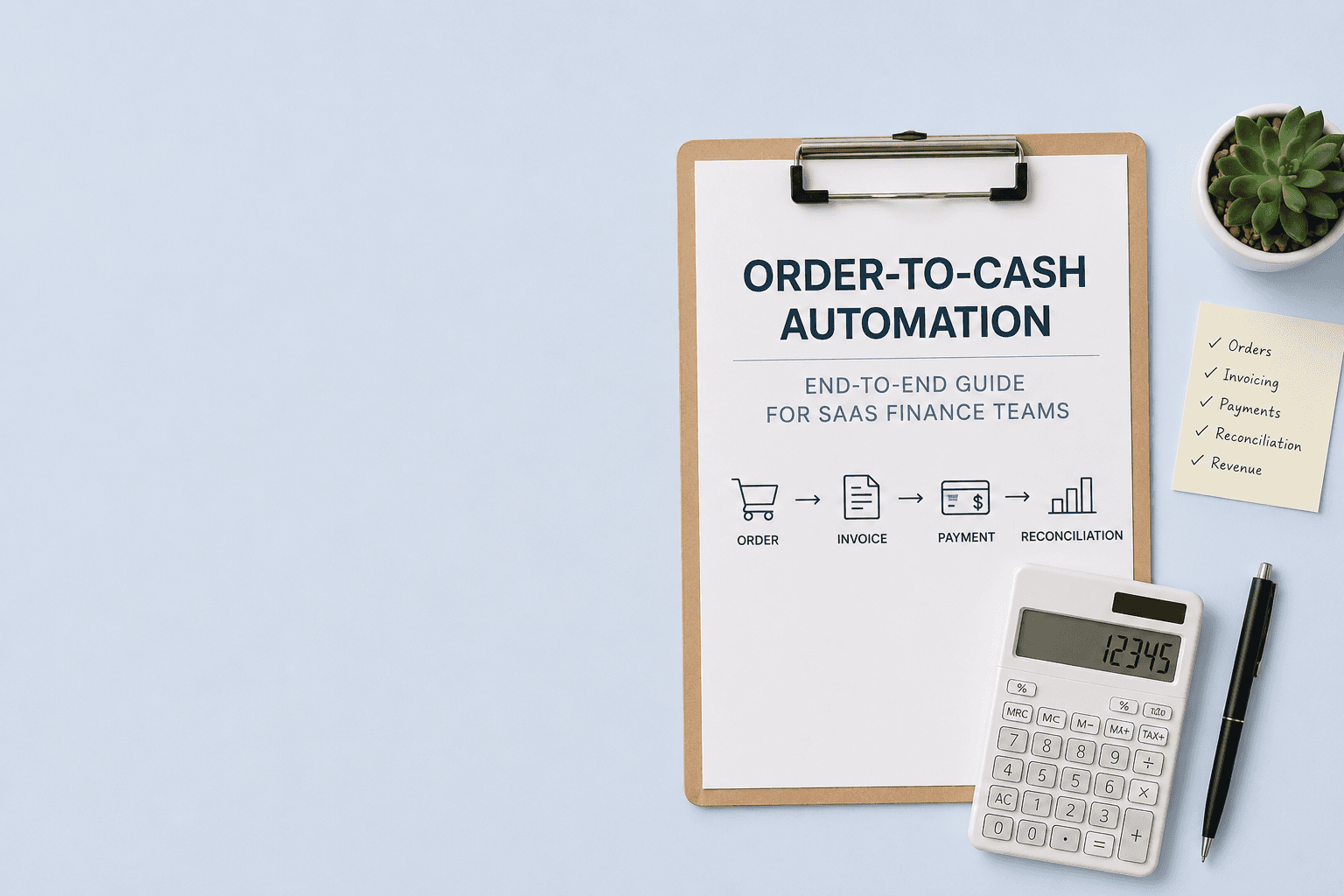
Sales Isn't Revenue: What Founders Get Wrong About Billing, Tracking, and Collecting


Most startups do a brilliant job selling, but many fail to build the systems that turn signed contracts into cash. Closing deals is only half the equation. The other half—billing correctly, tracking recognized revenue, and collecting on time—is where companies win or stumble.
Why "sales" and "revenue" are not the same
A signed contract is a win for sales, but it is not automatically recognized as revenue. Accounting rules and good business practice require you to convert that contract into an invoice, track receivables, and actually collect the funds. Investors and auditors care about recognized revenue, not just closed deals. Throwing around "revenue" as a catch-all term causes confusion. Revenue is an accounting construct; sales is a commercial activity.
"Closed won doesn't pay the bills" — a reality we explored in depth with Armand Zand on the JustPaid Podcast episode "Sales isn't Revenue | Talk on Finance with Armand Zand", where finance leaders share how this disconnect impacts everything from cash flow management to investor reporting.
Start with automation, not headcount
The single most useful early move is to automate quote-to-cash processes—even for your first one or two customers. Don't wait until you have dozens of clients. Put contracts in a central place, generate invoices automatically, and connect payment methods. This saves you from rebuilding processes later and prevents the common spreadsheet chaos that hides receivables.
Manual processes lead to embarrassing discoveries: stale checks in drawers, unreachable customers, and out-of-date spreadsheets. Automation reduces human error, standardizes onboarding, and creates a single source of truth for finance.
What automation should cover
- Contract storage and version control
- Automated invoice generation from contracts
- Integrated payment collection (cards, ACH, Stripe, etc.)
- AR tracking with aging and reporting
- AP integrations and bank reconciliation
Key metrics every founder must track
Knowing a few finance metrics will stop most fires before they start. These are the basics you should be able to pull from day one:
- ARR vs. Recognized Revenue: Know the difference. ARR is a sales metric; recognized revenue follows accounting rules and timing.
- Days Sales Outstanding (DSO) / AR Days: Target under 90 days; best practice around 45-60 days. The faster you collect, the healthier your cash flow.
- Days Payable Outstanding: Ideally 40-60 days. Collect fast, pay slowly.
- Burn rate: Not just monthly cash out. Burn requires understanding net income adjusted for changes in AR and AP. If you can't explain why burn changed month to month, your financial model is incomplete.
Tools and even ChatGPT can help calculate these metrics from accounting exports, but having a reliable accounting source is critical before you make strategic hiring or fundraising decisions.
Revenue recognition and ASC 606: when it matters
ASC 606 governs how companies recognize revenue. If you are running a lifestyle business and never plan to raise outside capital, the standard is less urgent. The moment you present revenue metrics to investors, the accuracy of those numbers matters—and misstatements can lead to restatements, audits, investor disputes, or worse.
Practical guidance:
- When you're fundraising or issuing performance metrics to a board, ensure recognized revenue is accurate and defensible.
- Use compliant tools that support ASC 606 workflows when possible.
- Bring a finance professional—fractional or full-time—to validate numbers before they go into decks or board materials.
When to hire: bookkeeping, accountant, controller, CFO
The lifecycle of finance hires should align to complexity and scale, not arbitrary timing. Here's a pragmatic timeline:
- Bookkeeper / outsourced accountant — Start immediately. You need month-end closes to pay taxes and to prepare for any investor conversations.
- Controller / VP of Finance — As revenue and transactions grow, and as you need stronger financial controls and forecasting.
- Fractional or full-time CFO — Consider around or after Series A or when you reach meaningful scale (for many SaaS businesses, when ARR approaches $5M+), or earlier if you need strategic finance leadership for fundraising and governance.
If your business is a straightforward SaaS with predictable billing, outsourced accounting can work well for a long time. If you have inventory, proprietary systems, customer funds, crypto, or complex integrations, bring someone in-house who deeply understands your business flows.
Tools, AI, and what they can do today
There are increasingly capable tools for quote-to-cash and revenue compliance. Some platforms include built-in revenue recognition and ASC 606 support. AI tools like ChatGPT are great for learning and quick calculations (for example, calculating AR days from a QuickBooks export), but a machine cannot yet fully close your books end to end without human oversight. Expect the landscape to evolve rapidly.
Common pitfalls and how to avoid them
The biggest risks are rarely fraud or stolen funds. They are operational: not knowing whether you have enough cash to hire, not understanding why burn moved, and failing to collect receivables.
- Spreadsheet as the source of truth — Leads to errors and missing records. Move to centralized systems early.
- Not collecting promptly — Paper checks and manual follow-up increase AR days and risk uncollectible receivables.
- No operating model — Without a model that ties hiring or spend decisions to cash flow and revenue recognition, you are making blind trade-offs.
- Hiding bad news — CEOs who avoid hearing bad news put the company at risk. Use finance as a risk-identification tool and act early.
Action checklist for the first customer (and second)
- Put contracts in a central, accessible location.
- Implement a low-cost quote-to-cash tool that integrates with Stripe, PayPal, or your bank.
- Automate invoice creation and offer electronic payment options — avoid paper checks when possible.
- Measure AR days and track aging weekly.
- Close your books monthly so you can answer simple questions like: Do we have cash to hire two engineers? What is our true burn?
- Get a finance professional to validate revenue recognition before it goes into investor decks or board packs.
Final thought
Selling is only the beginning. Startups that win early are the ones that turn sales into cash reliably, standardize processes around automation, and understand the difference between sales metrics and accounting revenue. Build systems early, measure the right things, and get honest financial advice before you need it. That discipline protects your runway, your credibility, and ultimately your ability to scale.
Get Started with JustPaid
Automate invoicing, streamline accounts receivable, and accelerate revenue with JustPaid. Compare JustPaid pricing plans or book a walkthrough.