The Agent-to-Agent Future of Billing Is Already Here. Healthcare Saw It First.


U.S. hospitals spend $19.7 billion every year fighting denied insurance claims. More than half of that — $10.6 billion — is wasted on appealing claims that should have been paid the first time. The reason the number keeps climbing is simple, and it has nothing to do with healthcare.
Insurance companies started using AI to deny claims faster than hospitals could appeal them. The provider side never caught up.
That asymmetry is the leading indicator for what's about to happen to every B2B billing relationship. I sat down with Krishang Todi, CEO of Aegis (YC 2025), on the JustPaid podcast last week. Krishang is building AI agents that handle insurance claim denials end-to-end — and the way he frames the future of revenue cycle management is the clearest preview I've heard of where SaaS billing is heading next.
The Denial Loop Is Already Agentic — On One Side
Krishang's framing of the healthcare problem is precise: insurers deployed AI for adjudication years before providers had any AI defense. The result is a one-sided arms race.
"Insurance companies have been using a lot of AI technologies to adjudicate claims, leading to more and more denials. The traditional infrastructure that hospitals have in place to fight back has started failing down."
The numbers back him up. According to Premier Healthcare's national denials survey, 15% of all claims submitted to private payers are now initially denied. 54.3% of those denials get overturned on appeal — meaning the claim was valid all along. Hospitals spend an average of $43.84 per claim just to contest a denial that the insurer already knew should have been paid.
This is the same shape forming in B2B SaaS. Procurement teams at large buyers are already using AI to scrutinize vendor invoices, catch usage discrepancies, and dispute charges automatically. Most finance teams on the seller side are still chasing payments in spreadsheets and Slack DMs. The seller-side response is manual; the buyer-side challenge is automated. That gap is where revenue leaks.
What "Agent-to-Agent" Actually Looks Like
Krishang's vision for Aegis isn't "AI helps the appeals clerk work faster." It's the appeals clerk going away.
His description of the end state:
"You have AI agents on both the provider side and the insurance side that figure out amongst themselves what is an appropriate amount that should be reimbursed. Our agents can automatically file prior authorization requests, submit claims, and if there's a denial, automatically fight it back."
He estimates 80-90% of the humans currently doing this work won't be needed.
This is the shape of the change, and it generalizes. Any billing dispute is structured data plus rules plus a back-and-forth negotiation. That's the exact workload LLMs are good at, and it's exactly how B2B billing disputes work today — from contract interpretation to usage true-ups to revenue recognition adjustments.
| Workload | Today | In 24 months |
|---|---|---|
| Invoice dispute response | AR analyst, 2-5 days | Agent, minutes |
| Contract-to-invoice reconciliation | Manual diff in Excel | Agent extracts + flags |
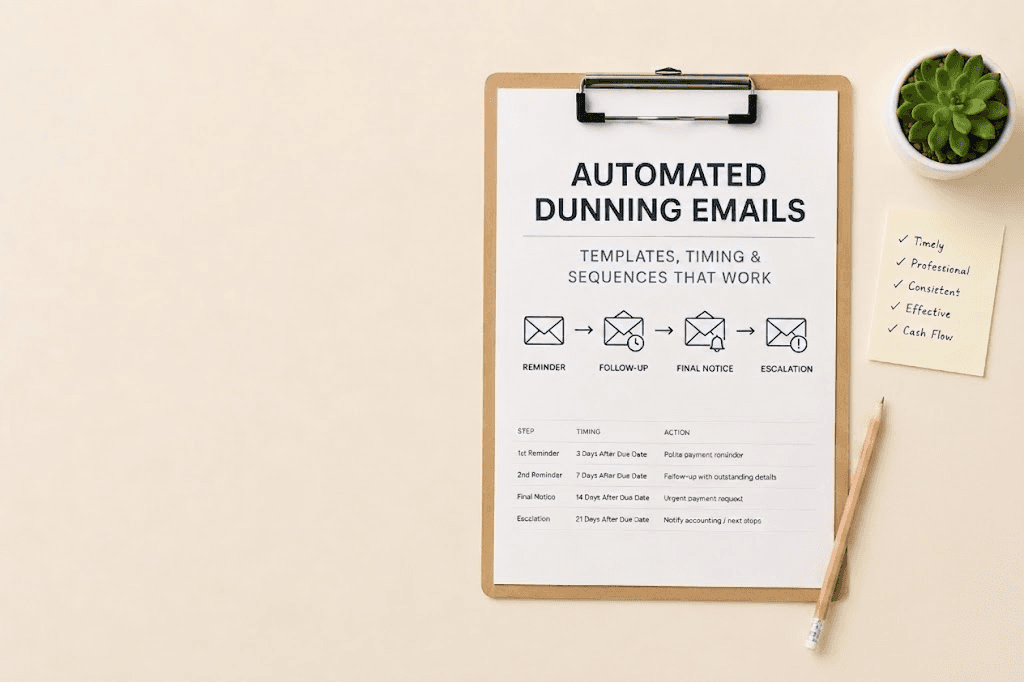
| Dunning sequence escalation | Rule-based email tool | Agent negotiates payment plan |
| Revenue recognition adjustments | Controller + auditor review | Agent proposes, human approves |
The humans don't disappear. The work they do shifts from execution to oversight.
Why Voice Agents Aren't the Endgame
The most useful thing Krishang said about where AI in healthcare is overhyped:
"As soon as the insurance company picks up the call and realizes it's an AI, they would cut the call."
This is happening across healthcare right now. Voice agents calling insurers to check claim status get hung up on the moment they're detected. The "innovation" was bolting an AI mouth onto a broken phone-tree process. The phone tree was the problem.
The same lesson applies to B2B collections. Nobody — buyer or seller — wants to be called by an AI about a late invoice. The win isn't "AI calls your customers." The win is preventing the dispute from existing in the first place: the contract terms were ambiguous, the invoice didn't match the PO, the usage data wasn't reconciled. Fix that upstream and the call never has to happen.
This is why we built JustPaid's AI contract extraction and reconciliation layer before we built Reminder AI. The reminders are downstream. The disputes start at the contract.
The "20X Company" — Why Lean Teams Will Win Billing Too
Krishang made a comment that's worth reading twice:
"We're able to build this entire software with a team of just three people. We've mastered understanding how AI works. So we are more likely to provide you a more autonomous solution than any of these other companies who have hundreds of people on their payroll."
He was referencing Garry Tan's "20X company" framing — the idea, popular inside YC right now, that a startup where every internal function is automated with AI can match the output of a company 20 times its size. According to YC, about 25% of its current batch ships codebases that are 95% AI-written. CNBC reported earlier this year that the current YC cohort is the fastest-growing in the fund's history, and AI is the reason.
The implication for B2B finance teams is uncomfortable but obvious: the AR org of the future isn't 15 people. It's 3 people running a system. Not because of layoffs — because the work itself collapses. The companies that figure this out first will operate with structurally lower G&A than their competitors, which compounds into pricing flexibility, which compounds into market share.
If you're a finance leader, the question isn't "how do I add AI to my team." It's "what does my team look like when the work is 20x smaller."
What This Means for Finance Teams Right Now
Three concrete moves for B2B finance and RevOps leaders this quarter:
1. Audit which billing decisions are still rule-based human work. Dunning logic, dispute responses, revenue recognition adjustments, usage true-ups. These are the first to go fully agentic. If a junior analyst can do the task with a runbook, an agent can do it for $0.04 per call.
2. Stop buying tools that replicate manual workflow. The market is full of dashboards that "give your team visibility" into things a human still has to act on. Buy tools that eliminate the workflow, not tools that make the workflow prettier.
3. Pick vendors building toward agent-native, not chatbot-bolted. Ask any billing vendor a specific question: when a buyer's AP agent disputes one of your invoices, what happens? If the answer involves a human on your side opening a ticket, the architecture is already obsolete.
The Takeaway
Krishang is solving denial appeals because that's where the asymmetry is most painful right now. But the structural insight — agents on both sides of a financial transaction, negotiating with each other — is the same insight reshaping every billing relationship in B2B. Healthcare is just the canary.
The founders and finance leaders who internalize the agent-to-agent shape now will spend the next five years building a different cost structure than everyone else. The ones who wait will be appealing their own version of $19.7 billion in lost revenue, one ticket at a time.
If you're rebuilding your AR motion for an agent-native world, book a JustPaid demo — that's the world we're building for.
Frequently Asked Questions
Sources & Further Reading
- Full podcast episode: Reinventing Healthcare Billing With AI — Krishang Todi (Aegis, YC 2025)
- Krishang Todi & Aegis: https://aegis.health
- Premier Healthcare denials data (2022 survey, 516 hospitals): Trend Alert: Private Payers Retain Profits by Refusing or Delaying Legitimate Medical Claims
- Garry Tan on the "20X company" concept: How to Build a 20X Company
- YC's AI-driven growth data: Y Combinator startups are fastest growing in fund history because of AI — CNBC
Get Started with JustPaid
Automate invoicing, streamline accounts receivable, and accelerate revenue with JustPaid. Compare JustPaid pricing plans or book a walkthrough.